
The self-storage industry is experiencing unprecedented competition in 2026. With unit inventory increasing by 9.3% over the past three years and 53.6 million net rentable square feet still under construction, facility operators can no longer rely on simply having a website to attract customers. The digital landscape has transformed dramatically, with artificial intelligence reshaping how potential renters discover storage solutions and Google’s algorithm updates prioritizing local, high-quality results over generic content.
If you’re a self-storage operator looking to fill units and stay ahead of corporate REITs with massive marketing budgets, mastering search engine optimization (SEO) isn’t optional—it’s essential for survival. This comprehensive guide explores the most effective SEO for Self Storage strategies specifically tailored for self-storage facilities in 2026, helping you capture high-intent local traffic and convert browsers into paying tenants.
Understanding the 2026 Self-Storage SEO Landscape
Before diving into tactics, it’s crucial to understand what’s changed. Google’s AI Overview now captures significant traffic that previously flowed to individual websites. Between AI-generated summaries, the Google Map Pack, and featured snippets, traditional organic listings are fighting for whatever visibility remains. For self-storage operators, this means one thing: local SEO is now more critical than ever.
The good news? Self-storage is hyperlocal by nature. Most customers travel within 30 minutes of their home to reach a facility, which means you’re not competing globally—you’re competing for your neighborhood. The operators winning in 2026 aren’t necessarily the largest or best-funded; they’re the ones who adapt fastest to the evolving digital landscape and serve their local customers best.
1. Dominate Local SEO to Capture Nearby Customers
Local SEO should be the foundation of your entire digital marketing strategy. Ranking in the Google Map Pack (the top three local results) can dramatically impact your occupancy rates and revenue.
Optimize Your Google Business Profile (GBP)
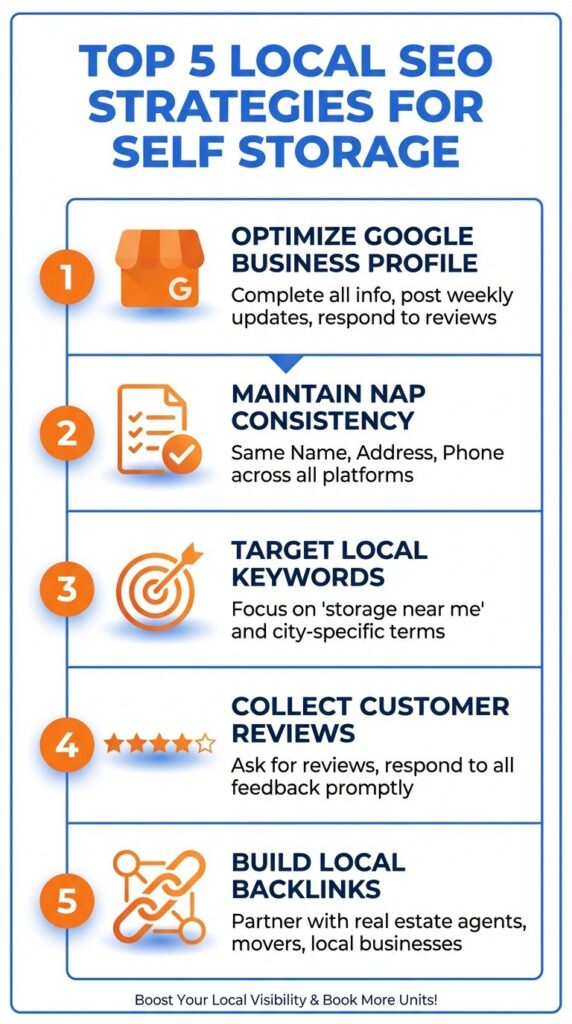
Your Google Business Profile is now your most valuable digital asset—even more important than your website. Most potential customers encounter your GBP before they ever visit your site, making it essential to optimize every element:
- Keep information accurate and complete: Ensure your business hours, contact details, address, and services are current. Inaccurate information confuses customers and hurts rankings.
- Add high-quality photos and videos: Upload professional images of your units, facility exterior, security features, and amenities. Include virtual tours if possible.
- Post regular updates: Create weekly posts about promotions, facility news, seasonal storage tips, or local events. Active profiles rank higher.
- Utilize all features: Enable messaging, add Q&A responses, list your services, and specify attributes like “climate-controlled units” or “24-hour access.”
- Respond to every review: Engage with customer feedback promptly—both positive and negative. Review responses signal to Google that you’re an active, caring business.
Maintain NAP Consistency Across All Platforms
Your Name, Address, and Phone Number (NAP) must be identical across every online directory, social media platform, and citation. Inconsistent NAP details confuse search engines and damage your local rankings. Audit your listings on:
- Google Business Profile
- Bing Places
- Yelp
- Industry-specific directories like SpareFoot, Store and Insure, and Compare The Storage
- Local business directories and chamber of commerce listings
Target Location-Specific Keywords
Focus your content on high-intent, local search phrases that potential customers actually use:
- “storage units near me”
- “self storage in [city name]”
- “climate controlled storage [neighborhood]”
- “RV storage near [landmark]”
- “cheap storage units [zip code]”
Incorporate these keywords naturally throughout your website, GBP description, and location pages. Don’t keyword stuff—write for humans first, search engines second.
Leverage the Power of Brand Searches
One of the most powerful SEO signals is people searching directly for your business name. You can’t fake branded searches—they tell Google your facility is trusted and recognized. Increase brand searches by:
- Running targeted Google Ads campaigns
- Optimizing your GBP for maximum visibility
- Encouraging satisfied customers to recommend you by name
- Creating memorable branding and community partnerships
2. Build a Mobile-First, High-Converting Website
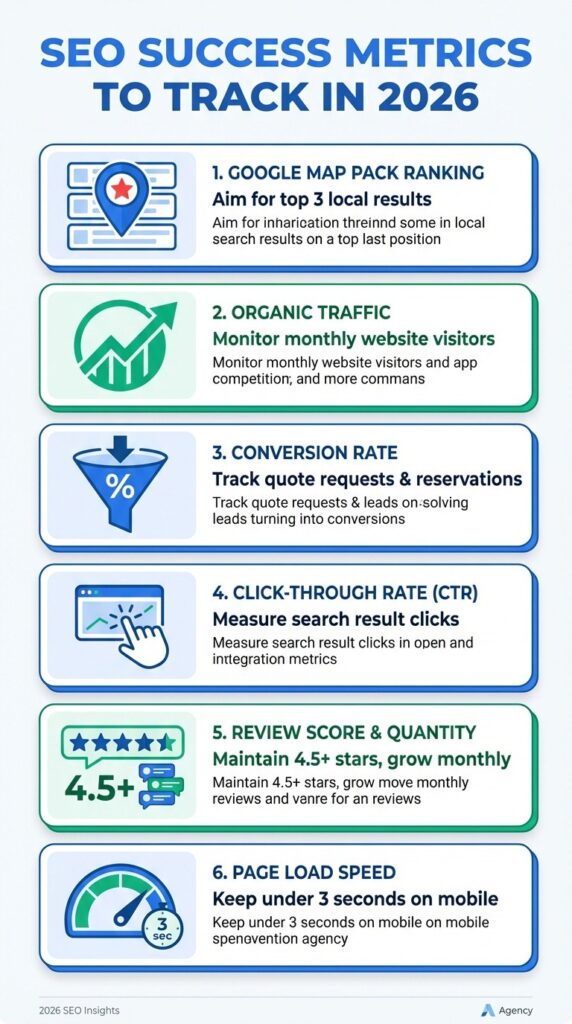
Having a website isn’t enough—it must be fast, mobile-optimized, and conversion-focused. Most self-storage searches happen on mobile devices (84% of “near me” searches), and slow-loading sites cause immediate abandonment.
Prioritize Speed and Mobile Experience
Use Google PageSpeed Insights to identify and fix performance issues. Your site should load in under three seconds on mobile devices. Compress images, minimize code, leverage browser caching, and consider using a content delivery network (CDN).
Enable Online Reservations and Self-Service
Modern customers prefer booking online without phone calls. Make the rental process seamless with:
- Instant online reservations with confirmation
- Real-time unit availability and pricing
- Digital lease signing
- Online payment processing
- Unit size calculators (“What fits in a 10×10?”)
Integrating comprehensive self-storage software ensures customer requests are processed efficiently, reducing friction and increasing conversions.
Optimize for Website Conversion
You may have fewer website visitors than before, but they’re higher-quality leads ready to rent. Maximize conversions by:
- Displaying customer testimonials prominently
- Showcasing your unique selling points (locally owned, newest facility, rate-lock guarantee)
- Using clear calls-to-action (CTAs) on every page
- Offering virtual tours or detailed unit photos
- Creating urgency with limited-time move-in specials
- Minimizing clicks required to complete a reservation
3. Create Strategic, High-Intent Content
While extensive blogging isn’t necessary for self-storage SEO, creating targeted content that addresses immediate customer needs is powerful. Most people searching for storage want to rent quickly, so your content should target those immediate needs.
Develop Practical Storage Guides
Answer common questions with helpful content:
- “What fits in a 10×10 storage unit?”
- “How to prepare items for climate-controlled storage”
- “Storage unit size guide for different home sizes”
- “Packing tips for long-term storage”
- “How to organize your storage unit for easy access”
Create Localized Moving and Storage Tips
Position your facility as a helpful local resource:
- “[City name] moving guide: Best neighborhoods and storage options”
- “Seasonal storage solutions for [city] residents”
- “College storage tips for [local university] students”
- “How to declutter your [city neighborhood] apartment”
Build a Comprehensive FAQ Section
FAQs rank well for long-tail keywords while providing genuine value. Address topics like pricing, access hours, security features, insurance, payment methods, and move-in procedures.
4. Master the Art of Building Domain Authority
Building domain authority through quality backlinks remains crucial for rankings. Even small operators who focus on strategic link-building can outrank larger competitors.
Partner with Local Businesses
Build mutually beneficial relationships with:
- Real estate agents (they have clients downsizing or relocating)
- Moving companies (natural referral partners)
- Home organizers and decluttering services
- University housing offices
- Property management companies
- Local contractors and renovators
Exchange backlinks, create co-marketing campaigns, or offer referral incentives.
Get Listed in Quality Directories
Ensure your facility appears in:
- General directories: Yelp, Yellow Pages, Angie’s List
- Self-storage directories: SpareFoot, U-Haul Storage Affiliate Network, Store and Insure
- Local business directories and chamber of commerce sites
These listings provide valuable backlinks and often rank high in search results themselves.
Pursue Media Mentions and Local PR
Get featured in local media through:
- Press releases about new facilities or services
- Community involvement and sponsorships
- Local business awards or recognition
- Expert commentary on moving/storage trends
5. Optimize for Voice Search and AI-Powered Queries
Voice search and AI assistants are reshaping how people find self-storage in 2026. Optimize for conversational queries by:
- Using natural, question-based keywords (“Where can I find affordable storage near downtown?”)
- Creating FAQ content that directly answers common questions
- Optimizing for featured snippets with concise, clear answers
- Using structured data markup (schema) to help AI understand your content
- Writing in a conversational tone that mirrors how people actually speak
6. Harness the Power of Online Reviews
According to recent research, 98% of consumers read online reviews for local businesses, and 49% trust online reviews as much as personal recommendations. Your review strategy should include:
Actively Collect Reviews
- Send follow-up emails or texts requesting reviews after move-in
- Offer small incentives (discount on next month’s rent) for honest feedback
- Make the review process easy with direct links
- Ask satisfied customers in person during their visit
Respond to Every Review
Reply to all reviews—positive and negative—within 24-48 hours. Thank customers for positive feedback and address concerns in negative reviews professionally. Public responses demonstrate you care about customer experience and influence both rankings and conversion rates.
Monitor Your Online Reputation
Track reviews across all platforms: Google, Facebook, Yelp, SpareFoot, and industry-specific sites. Use reputation management tools to receive immediate notifications and respond promptly.
7. Invest Strategically in Paid Advertising
While organic SEO builds long-term traffic, paid advertising provides immediate visibility—especially valuable in competitive markets. A balanced Self Storage marketing strategy ensures you capture both short-term demand and long-term organic growth.
Google Search Ads
Running paid search ads alongside organic listings strengthens your overall presence. Target high-intent keywords like “storage units [city]” and use:
- Location targeting with multiple radius distances
- Proper ad extensions coordinated with your GBP
- Negative keywords to avoid irrelevant clicks
- Conversion tracking for quotes and reservations
- Call tracking with dynamic phone numbers
- Remarketing campaigns for abandoned bookings
Google Local Service Ads (LSAs)
Local Service Ads appear above traditional search ads, helping you reach local customers faster. They’re particularly effective for capturing “near me” searches and mobile users.
8. Create Location-Specific Landing Pages
If you operate multiple facilities, each location needs its own optimized page. Generic “template” pages harm your rankings.
Customize Content for Each Location
- Include unique descriptions mentioning nearby landmarks, neighborhoods, and communities
- Add location-specific keywords naturally throughout the content
- Feature local customer testimonials
- Include directions from major nearby areas
- Highlight location-specific amenities or features
- Use unique, high-quality photos of each facility
Implement Clear Calls-to-Action
Every location page should have obvious CTAs: “Reserve Your Unit,” “Get a Quote,” “Call Now,” or “Chat with Us.” Make conversion as frictionless as possible.
9. Leverage AI Tools to Streamline Your SEO Efforts
Embrace artificial intelligence to work smarter, not harder. Even small operators can benefit from AI platforms like ChatGPT, Claude, or Gemini to:
- Generate review responses: Paste reviews into AI tools and request professional responses following best practices
- Create marketing copy: Generate website descriptions, email campaigns, and social media posts
- Analyze competition: Research competitors’ rates, amenities, and keywords they’re targeting
- Synthesize industry data: Upload reports and extract key insights
- Optimize content: Improve existing website copy for better engagement
Start with one task and master it before expanding. The goal isn’t full automation—it’s freeing up time for high-value human interactions with customers.
10. Measure, Analyze, and Adjust Continuously
SEO isn’t a one-time project—it’s an ongoing process requiring regular monitoring and refinement.
Use Essential Analytics Tools
- Google Analytics 4: Track traffic sources, user behavior, conversion paths, and goal completions
- Google Search Console: Monitor search performance, indexing status, technical issues, and keyword rankings
- GBP Insights: Review how customers find your profile, what actions they take, and where they’re located
Conduct Regular A/B Testing
Test different elements to optimize performance:
- Meta descriptions and title tags
- Call-to-action button copy and placement
- Landing page headlines
- Image selection and placement
- Pricing display formats
Stay Informed on Algorithm Updates
Google’s algorithms constantly evolve. What worked six months ago may be less effective today. Follow reputable SEO news sources, participate in industry forums, and adjust your strategy based on proven results rather than speculation.
11. Don’t Rely Solely on Google’s Official Guidelines
While Google provides general SEO best practices, real-world experimentation often yields superior results. What Google emphasizes publicly doesn’t always align with what actually moves rankings in your specific market.
Test strategies beyond official recommendations, track results meticulously, and double down on what works for your facility. Every market is unique, and your competitive landscape requires customized approaches.
12. Boost Rankings by Improving Click-Through Rates
An often-overlooked ranking factor is click-through rate (CTR). If more people click your listing compared to competitors ranked above you, Google interprets this as a quality signal and may improve your position.
Optimize Your Meta Titles and Descriptions
Treat your organic listings like advertisements. Craft compelling, benefit-driven copy that:
- Includes your primary keyword naturally
- Highlights unique selling points (first month free, climate control, 24/7 access)
- Creates urgency or curiosity
- Includes your location for local relevance
- Stays within character limits (titles: 60 characters; descriptions: 160 characters)
Use Structured Data Markup
Implement schema markup to enhance your listings with rich snippets—star ratings, pricing, availability, and special offers. Enhanced listings attract more clicks and improve CTR.
Conclusion: Winning Self-Storage SEO in 2026
The self-storage market in 2026 is more competitive than ever, but operators who master local SEO have a distinct advantage. You don’t need the largest budget or the flashiest website—you need strategic focus on what actually drives results: dominating local search, providing exceptional user experience, building genuine customer relationships, and continuously adapting to the evolving digital landscape.
Start by optimizing your Google Business Profile, ensuring NAP consistency, and building a fast, mobile-friendly website. Create valuable content addressing customer needs, collect reviews consistently, and build quality backlinks through local partnerships. Embrace AI tools to work efficiently, and measure everything to understand what’s working.
The facility operators thriving in 2026 won’t be those with the biggest marketing teams—they’ll be the ones who adapt fastest, serve customers best, and implement these proven SEO strategies consistently.
Remember: SEO is a marathon, not a sprint. Give new strategies 4-6 months to show results before changing course. Stay patient, stay consistent, and watch your occupancy rates climb as you dominate local search results in your market.
Ready to take your self-storage facility to the next level?
Implement these SEO best practices today and position your business as the go-to storage solution in your local market. The competition is fierce, but with the right strategy, you can capture more traffic, convert more leads, and fill more units than ever before.