local citations storage business
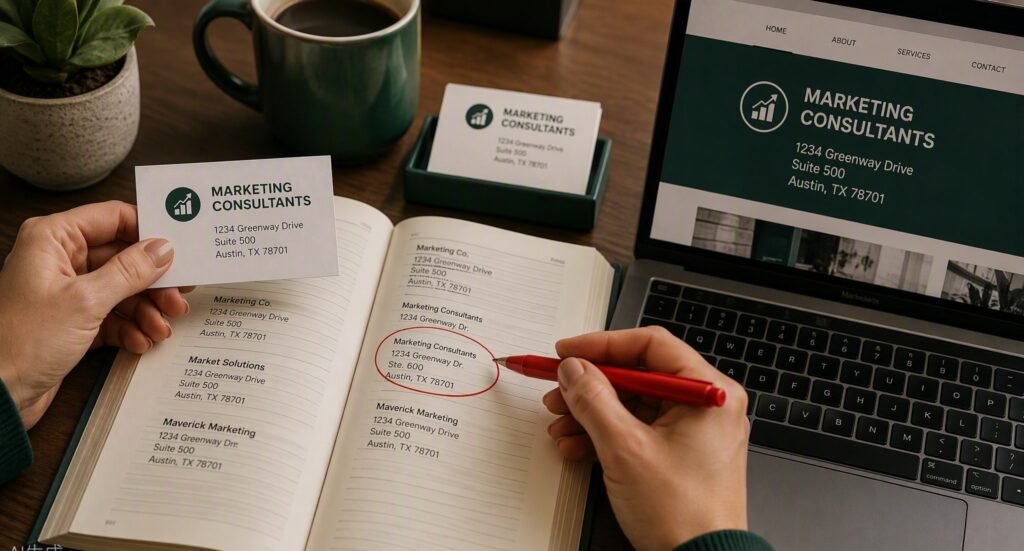
Top 8 Local Citations for Storage Businesses Strategies: Clean Up Your NAP and Climb the Map Pack Quick Navigation Find every mention of your facility: Run a full citation audit before you build anything new Lock in your anchor citation: Perfect your Google Business Profile first Cover the big platforms: Build citations on tier-1 directories and data aggregators Go industry-specific: Get listed where renters actually search for storage Standardize everything: One NAP format, everywhere, no exceptions Fix the ghosts: Remove duplicates, old addresses, and dead phone numbers Earn unstructured citations: Local news, chambers, and sponsorships Stay clean forever: Set up a quarterly monitoring routine Why Local Citations Deserve Your Attention (More Than You Think) Want expert help cleaning up citations and building your local presence from scratch? Our self storage SEO services handle the full citation audit, cleanup, and ongoing maintenance. Here’s a scenario that plays out at storage facilities every single week. A renter searches “storage units near me,” finds your facility in the map pack, taps the phone number… and reaches a disconnected line. Or they drive to the address on Yelp — which is your old office entrance on the other side of the property. Or they see your facility listed as “ABC Storage,” “ABC Self Storage,” and “ABC Storage Solutions” on three different sites and wonder if you’re even a real business. That renter doesn’t call to ask which listing is right. They call your competitor. Industry data suggests that roughly 80% of consumers lose trust in a local business when they find inconsistent contact information online — and in self storage, where the entire purchase decision often happens in a single search session, lost trust is a lost rental. The Map Pack ranking guide for storage units near me covers exactly how citation consistency feeds into your local 3-pack position. This is why local citations for storage businesses aren’t a boring SEO checkbox. They’re the connective tissue between your facility and every renter trying to find you. Generic local SEO advice says “get listed in directories.” That advice was written for pizza shops and plumbers. Storage is different: you likely have one location serving a 3–5 mile radius, you’re competing against REITs with dedicated SEO teams (Public Storage, CubeSmart, Extra Space all have pristine citation profiles), and your facility may have changed names, owners, or phone systems over the years — leaving a trail of digital ghosts that actively suppresses your rankings. This guide gives you the exact system to audit, build, clean, and maintain your citations so Google trusts your data and renters can actually reach you. Let’s get into it. 1. Audit Your Existing Citation Footprint Before You Build Anything Why? You can’t fix what you can’t see — and most storage facilities have 20–60 citations already floating around the web that they never created. Every facility accumulates citations automatically. Data aggregators scrape public records, old phone books, business registrations, and other websites, then spit out listings on dozens of directories without you lifting a finger. Sounds helpful — until you realize research shows that the majority of local businesses have at least one significant NAP error (wrong name, address, or phone number) somewhere in their citation profile, and they have no idea it exists. Think of it like moving into a house the previous owner left mid-renovation. Before you paint a single wall, you need to know where the water damage is. Building fresh citations on top of a dirty foundation just creates more conflicting signals for Google to untangle. Here’s how to implement this: Google your facility name in quotes — e.g., “ABC Self Storage” plus your city — and log every listing you find in a spreadsheet (URL, name shown, address shown, phone shown). Search for old versions of your business — previous names, previous phone numbers, the prior owner’s entity name. If your facility was ever rebranded or sold, these legacy listings are almost certainly still live. Run a free citation scan using tools like Moz Local, BrightLocal, or Whitespark to catch listings manual searching misses. Score each listing as Correct, Needs Update, Duplicate, or Can’t Access (yet). Self Storage Pro Tip: Don’t forget your phone number history. If you’ve ever used a call-tracking number, switched from a landline to a VoIP system, or had a different line for your kiosk, search for those old numbers directly. A stale tracking number indexed on a high-authority directory is one of the most common — and most damaging — citation errors we see in storage audits. Takeaway: A 2–3 hour audit gives you a master citation spreadsheet that becomes the blueprint for everything else in this guide. 2. Perfect Your Google Business Profile — Your Anchor Citation Why? Your GBP is the single most important citation on the internet; industry data suggests it influences roughly a third of local pack ranking factors, and it’s the listing renters actually interact with. Every other citation on the web exists, in part, to corroborate what your Google Business Profile says. Google cross-references your GBP against hundreds of sources to decide whether your facility is legitimate and where it should rank. If your GBP says “Suite B” and half your citations say “Ste. B” and the other half omit it, you’re introducing doubt into the algorithm — and doubt costs you map pack positions. For storage facilities specifically, the GBP is where the rental journey often starts and ends: direction requests, phone calls, and website clicks all flow through it. Understanding the Google Maps ranking factors for storage searches helps you know exactly which GBP signals carry the most weight. For everything inside your GBP dashboard, see the full Google Business Profile optimization guide for self storage. Here’s how to implement this: Claim and verify your listing if you haven’t (postcard, phone, or video verification). Set your official NAP exactly — business name with no keyword stuffing (“ABC Self Storage,” not “ABC Self Storage — Cheap Units in Dallas”), your physical street address, and