rank new storage facility
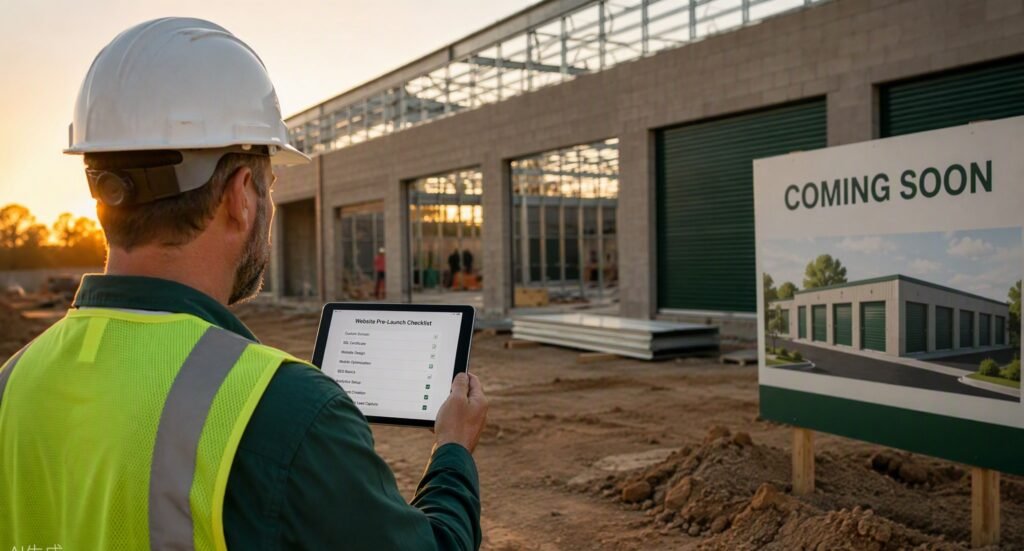
Top 8 SEO for New Storage Facilities Strategies: Rank Before You Even Open Quick Navigation Stake your claim: Launch a “coming soon” website the day you break ground Win the map: Set up and pre-seed your Google Business Profile Build trust signals: Lock down citations and NAP consistency before launch Own your town: Publish location content that ranks while you’re still building Capture demand early: Turn construction buzz into a waitlist of renters Borrow authority: Earn local backlinks and press around your development Start reviews at soft opening: Engineer five-star momentum from day one Measure everything: Set up tracking and benchmarks before you spend a dollar Why SEO for New Storage Facilities Is a Completely Different Game Here’s the uncomfortable truth: the day you cut the ribbon, you’re already behind. Your competitors — REITs with million-dollar budgets and established local players — have years of domain authority, hundreds of reviews, and a head start on every keyword that matters. Meanwhile, the average new facility takes 24 to 36 months to stabilize at 85–90% occupancy. Every month at 30% occupancy, you’re bleeding money. Most owners treat marketing as an opening-day activity. But search engines don’t work on your construction timeline — Google can take three to six months (longer for a new domain) to fully trust and rank a site. Launch the week you open, and you’ve handed competitors a six-month head start. Think of it like opening a restaurant: the smart restaurateur puts up the “Coming Soon” sign months early and builds buzz so there’s a line out the door on day one. SEO for new storage facilities works the same way — except your sign is your website, GBP, and citations, and the line out the door is a waitlist of renters who found you before you unlocked a single unit. This playbook shows you how to build that momentum, starting today. If you want a specialist in your corner from day one, our self storage SEO service is built specifically for facility owners. 1. Launch a “Coming Soon” Website the Day You Break Ground Why? A website that exists for six months before opening has a massive indexing and trust advantage over one that launches on opening day. The most expensive SEO mistake new owners make is treating the website as part of the build-out instead of the permitting phase. Industry data suggests new domains take 3–9 months to achieve stable local rankings even with solid optimization — a site launched on opening day may not rank until lease-up is well underway. The psychology: Google trusts age, consistency, and history. Every day your domain accumulates content and links, you’re building a track record — and a competitor who launched eight months before opening will outrank you no matter how nice your facility is. Here’s how to implement this: Buy your domain the moment your entity is formed. Use your brand name plus your city if the exact match is taken (e.g., summitstoragetulsa.com); avoid hyphens. Launch a real site, not a placeholder. A five-page site — Home, About, Unit Sizes (with “coming soon” pricing), Location, Contact — gives Google actual content to index; a splash page doesn’t. Include your full NAP (name, address, phone) in the footer of every page, exactly as it will appear everywhere else. Add SelfStorage schema markup with your address, geo-coordinates, and opening date so search engines understand what and where you are. Submit your XML sitemap to Google Search Console on day one and request indexing on key pages. Self Storage Pro Tip: Set your title tag to target “storage units in [City]” from day one — not your brand name. Almost nobody searches for a brand that doesn’t exist yet. Your H1 should read “Climate-Controlled Storage Units in [City] — Opening [Month, Year]”; adjust the date language later. Read more: [Link to: How to Rank in the Google Map Pack for ‘Storage Units Near Me’] Takeaway: Domain age is a ranking asset you can’t buy later — every month you delay is trust you hand to competitors. 2. Claim and Pre-Seed Your Google Business Profile Before You Open Why? Your Google Business Profile (GBP) drives more local leads than your website — and Google lets you create profiles for businesses that haven’t opened yet. Research shows roughly 70% of self-storage customers choose a facility within five miles of home or work, and the vast majority of those searches happen in Google’s local results — the Map Pack. If you’re not visible there, you don’t exist. Here’s what most new owners don’t know: Google lets you create a Business Profile months before opening and mark it “opening soon” — free, legitimate visibility in the exact channel where your customers search. The behavior behind this: Google rewards listings that are accurate, complete, and fresh. A verified, actively managed profile signals a business worth ranking; an empty one signals a gamble. And facilities under construction routinely show search activity in GBP insights within weeks — your future customers are already looking for you. Here’s how to implement this: Create and verify your GBP as soon as you have a permanent address. Verification at a construction site can be tricky — request video verification showing signage, site plans, or your trailer. Choose categories strategically. Primary: “Self-storage facility.” Add secondaries like “RV storage facility” only if they genuinely apply. Upload photos monthly — construction progress, renderings, the sign going up. Fresh photos drive engagement and build a visual timeline of legitimacy. Publish weekly Google Posts about your progress: “Foundation poured,” “Now taking reservations.” Posts expire after seven days, so consistency matters. Seed your Q&A section yourself. Ask and answer the questions renters will have — it’s 100% allowed and it’s free keyword-rich content. Self Storage Pro Tip: Use a tracking number as your primary GBP number and your real local number as the secondary. This preserves NAP consistency while letting you measure how many calls GBP generates during lease-up — just make sure the local number matches